
What Is Rock Candy? Surprising Facts You Must Know

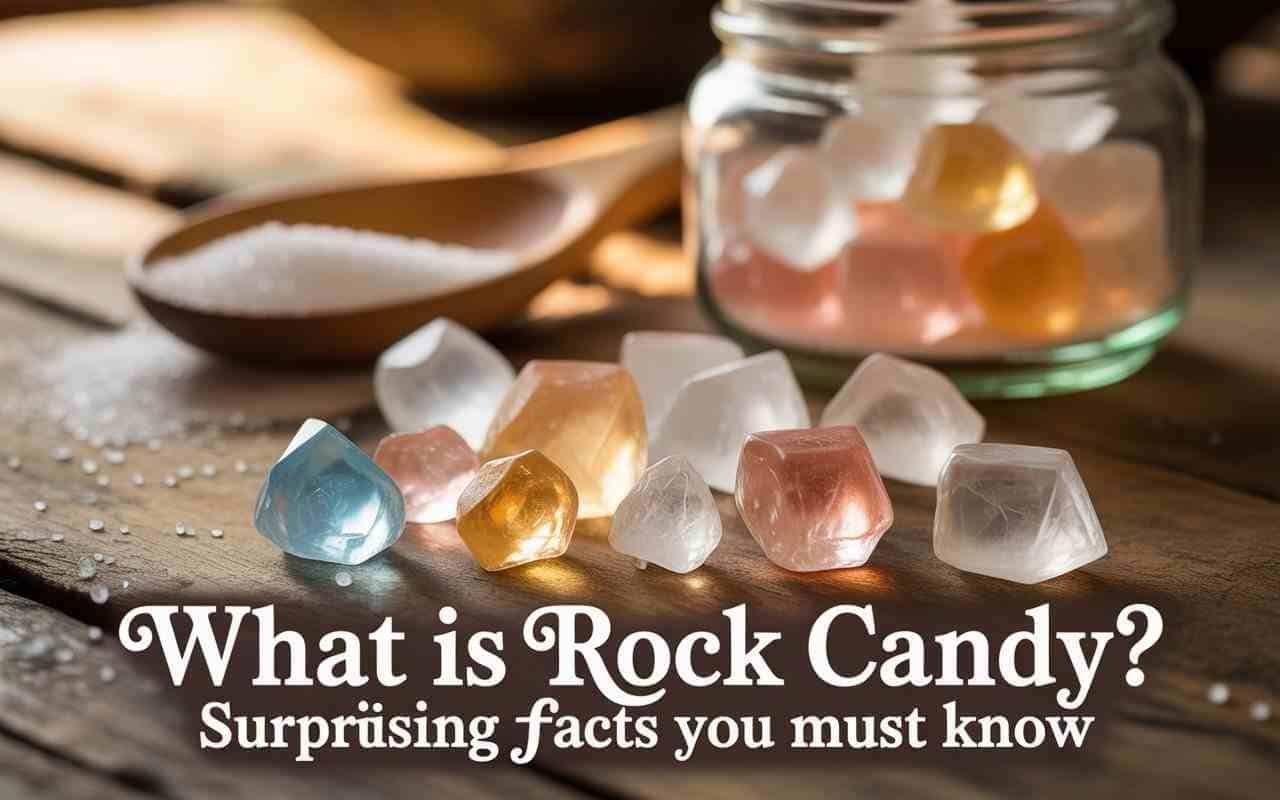
What is rock candy? It’s a sweet treat, also known as misri or sugar candy, made from large sugar crystals. These crystals form through a slow crystallization process, created by dissolving sugar in water to make a supersaturated solution. Over time, this solution gradually forms solid crystals.
Rock candy has been enjoyed for centuries and is often used in beverages like tea. It’s also a decorative element in desserts, known for its simple ingredients—sugar and water. This candy is popular across many cultures, adding sweetness to food and traditions.
Many people confuse rock sugar with rock candy. While both are made by crystallizing sugar, rock sugar typically forms smaller crystals and is often used in cooking and tea, whereas rock candy forms larger, more visually striking crystals.
How Is Rock Candy Made?
Rock candy is made by creating a supersaturated sugar solution, where more sugar is dissolved in water than it would normally dissolve. This solution is heated until the sugar completely dissolves, allowing for more sugar to be added. As the solution cools, the excess sugar begins to crystallize, forming small sugar crystals. These crystals grow over several days as more sugar attaches to them, creating large, solid crystals. The process is slow, but the result is the familiar, sparkling rock candy that can be enjoyed as a sweet treat.
Rock Candy Crystals
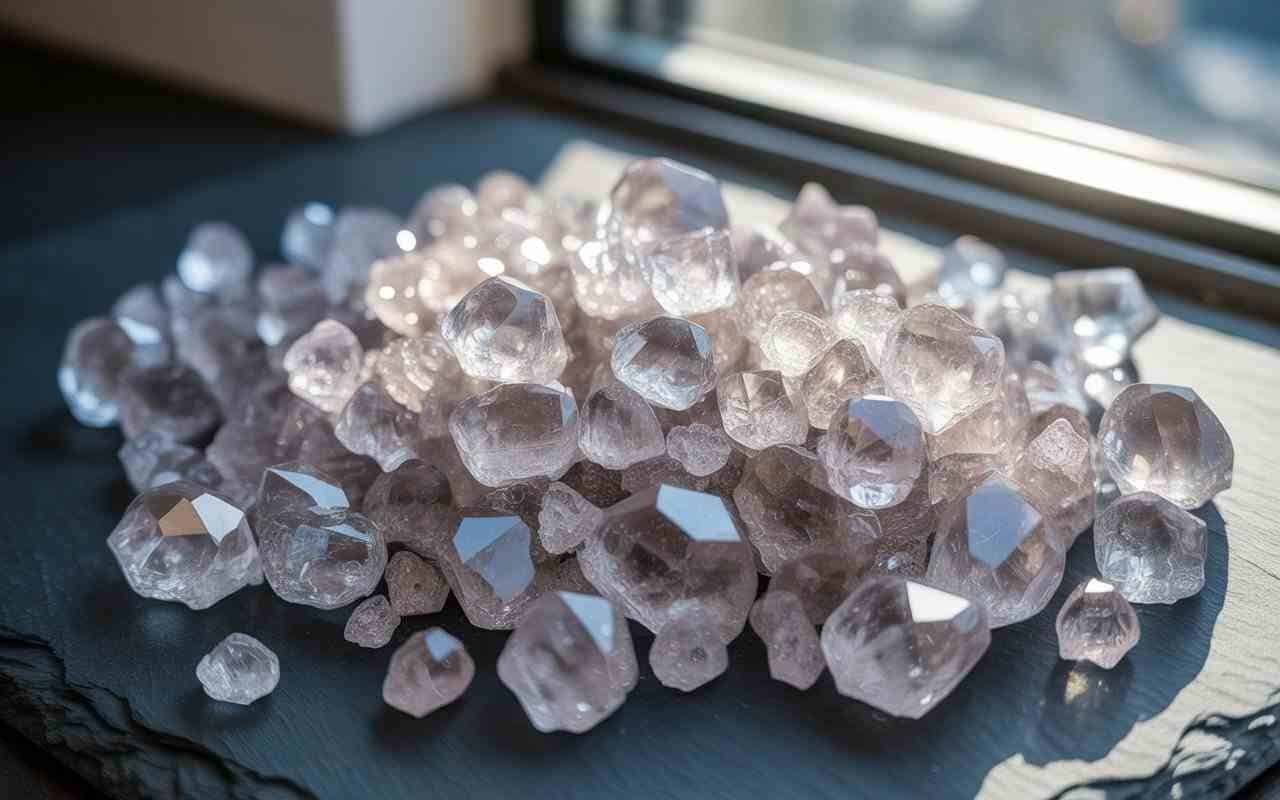
As the sugar solution cools, rock candy crystals begin to form, growing larger over time as more sugar attaches to them.
How to Make Homemade Rock Candy
If you’re curious about how to make homemade rock candy, it’s quite simple. Start by dissolving sugar in water, create a supersaturated solution, and let the sugar crystallize over time.
Rock Candy’s Use in the 19th Century as a Confectionery
In the 18th and 19th centuries, as sugar became more widely available, rock candy evolved from a medicinal item into a beloved confectionery. It was often used to sweeten beverages like tea and lemonade, and was commonly enjoyed as a treat in many cultures.
Ingredients in Rock Candy
To make rock candy, you’ll need a few essential ingredients. Here’s a breakdown:
- Sugar: The primary ingredient that forms the basis of the candy.
- Water: Dissolved with sugar to create a supersaturated solution.
- Optional: Color and flavor can be added for extra appeal and taste.
These ingredients are key to making your own rock candy at home.
Origin and History of Rock Candy
Rock candy has its origins in India and Iran, where it was first made for medicinal purposes. The crystallized sugar was used to treat ailments such as sore throats and coughs. Over time, the use of rock candy spread to China and Europe, where it evolved from a medicinal item to a popular confectionery. By the 17th century, rock candy became widely consumed as a sweet treat, and its use in cooking and beverages like tea became common across many cultures.
Rock Candy Facts
Here are some surprising rock candy facts: it was originally used as a medicinal item in ancient cultures and evolved into the treat we know today.
Etymology and Historical Background
Rock candy has a rich history that traces back to the 9th century, with Islamic writers documenting the crystallization process of sugar. The term ‘rock candy’ itself comes from the Arabic word ‘qandi’ and Persian ‘qand,’ referring to cane sugar. This technique spread across the world, evolving into various types of sugar candy in cultures worldwide.
Common Uses of Rock Candy
- Tea: Rock candy is widely used in tea, especially in cultures like Iran and East Frisia, where it adds a touch of sweetness to hot beverages.
- Cooking: In Chinese cuisine, rock candy is a common ingredient in chrysanthemum tea and various savory dishes, acting as a natural sweetener.
- Decoration: Rock candy makes an excellent addition to cakes, cocktails, and festive desserts, adding both visual appeal and sweetness.
- Traditional Medicine: Historically, rock candy was used in traditional medicine to soothe sore throats, treat coughs, and aid digestion in different cultures.
- Rock Candy Sweets: Today, rock candy sweets are commonly used as decorative elements in weddings, adding both visual appeal and a sweet flavor to cakes and desserts.
- Japanese Rock Candy: In Japan, Japanese rock candy is known for its unique flavor combinations and delicate sugar crystal structures, often enjoyed during traditional festivals.
Modern Uses and Trends
Today, rock candy is often used in cocktails for both flavor and visual appeal. It’s also a popular decorative element in weddings and other celebrations, where it is used to create stunning centerpieces and decorative accents for events.
Expanded Cultural and Medicinal Uses
Besides being popular in tea, rock candy has diverse uses across cultures:
- In China, rock candy is commonly used in savory dishes like chrysanthemum tea and baijiu, as well as for marinating meats.
- In Mexico, it is used to make sugar skulls for the Day of the Dead.
- In the Netherlands, rock candy is baked into sûkerbôle, a traditional luxury bread.
- In the U.S., rock candy is a classic ingredient in cocktails and is often used in festive drinks, adding both sweetness and visual appeal.
Types of Rock Candy
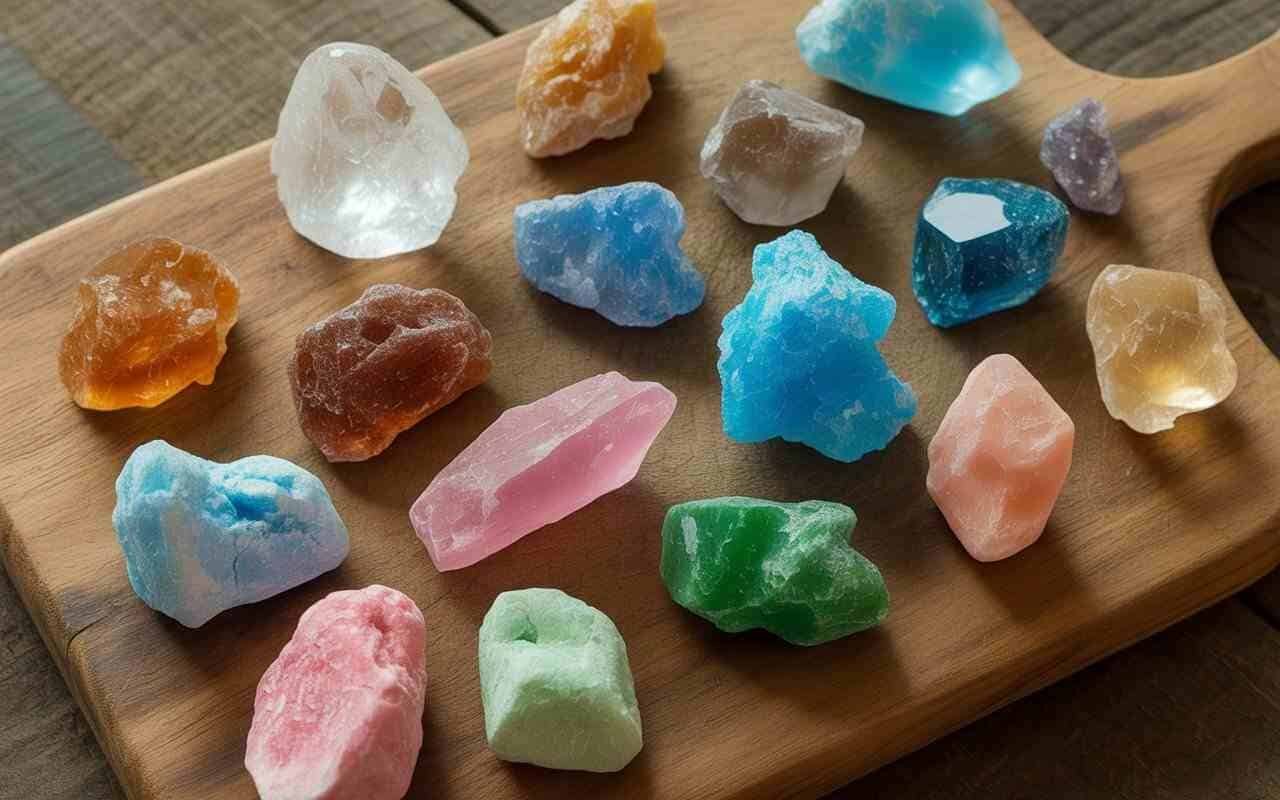
Rock candy comes in a variety of exciting forms, each offering a unique texture, flavor, and appearance. Whether you’re looking for something visually striking or a sweet, flavorful treat, there’s a type of rock candy for everyone.
1. Crystal Sticks: Colorful and Fun
Crystal sticks are the most popular form of rock candy. Large, sparkling sugar crystals are grown on a string or stick, resulting in a colorful and visually appealing treat. These are often enjoyed by kids and adults alike, used as party favors or to decorate desserts.
2. Brown Rock Candy: A Rich, Molasses Flavor
Brown rock candy is made using unrefined or brown sugar, giving it a rich, molasses-like flavor. This type offers a more complex and robust taste than traditional white rock candy, making it a great choice for those who prefer a deeper, more nuanced sweetness.
3. White Rock Candy: The Classic Sweetness
White rock candy is made from pure sugar, delivering a clean and simple sweetness. This classic form is perfect for beverages like tea or as a decorative element in desserts. Its light, straightforward flavor makes it a versatile option for many occasions.
4. Flavored Rock Candy: A Burst of Flavor
Flavored rock candy adds an exciting twist to the traditional treat. Available in fruit and spice varieties such as raspberry, lemon, and cinnamon, flavored rock candy lets you enjoy unique, customizable tastes in every bite.
5. Rock Candy Sticks: Easy to Enjoy
Rock candy sticks are another beloved version, with sugar crystals growing around a string or stick. These are easy to hold and eat, making them a fun and accessible treat for people of all ages. Rock candy sticks are often used in drinks, parties, and as festive decorations.
6. Crystal Forms: Monocrystalline vs. Polycrystalline Rock Sugar
Rock candy and rock sugar can also vary based on the crystal formation, which affects the appearance and texture:
- Monocrystalline Rock Sugar: This type forms a single, large crystal over time, resulting in a smooth, uniform, and elegant appearance. Monocrystalline sugar is often used for decorative purposes or when a more refined look is desired.
- Polycrystalline Rock Sugar: Polycrystalline rock sugar features multiple smaller crystals that cluster together, giving it a rougher texture and a more natural, rustic look. This type is commonly used in cooking and as a sweetener in various beverages.
Is Rock Candy Healthy?
While rock candy is a fun and tasty treat, it’s important to remember that it is essentially just sugar. Like any sugary product, it’s not healthy when consumed in excess and can contribute to health issues like weight gain and tooth decay. However, in traditional uses, such as in tea or as a remedy for sore throats, it was consumed in small amounts and served more as a natural sweetener or soothing agent. As with any candy, moderation is key to enjoying it responsibly without compromising your health.
FAQs
Who Invented Rock Candy and What Are Its Origins?
Although no single individual is credited with inventing rock candy, its origins trace back to ancient civilizations. Crystallized sugar was first used for medicinal purposes, long before it evolved into the sweet treat we know today.
When Was Rock Candy First Made and How Did It Become Popular?
Rock candy has been enjoyed for centuries. While it became widely popular in the 17th century, its origins date back to the 9th century, when sugar crystallization was first documented in ancient civilizations.
Why Is It Called Rock Candy and What Makes It Unique?
Rock candy gets its name from its resemblance to natural rock formations. The large, crystal-like structures are formed as sugar crystallizes from a supersaturated solution, creating visually striking and delicious sugar crystals.
How Do You Make Rock Candy at Home?
Yes, making rock candy at home is simple and fun! You’ll need sugar, water, and a surface like a stick or string for the crystals to form on. The process involves creating a supersaturated sugar solution and letting it crystallize over several days.
Is Misri the Same as Rock Candy? What’s the Difference?
Yes, misri is another term for rock candy, commonly used in India and Iran. Both refer to crystallized sugar lumps, often used in tea or as a natural sweetener in traditional remedies. Though the names may vary, they describe the same sweet treat.
What Is Rock Crystal Sugar and How Is It Different from Rock Candy?
Rock crystal sugar is another type of crystallized sugar similar to rock candy. It is used in cooking and decoration for its sparkling, crystal-like appearance. The crystallization process is the same, but rock crystal sugar typically forms larger, more uniform crystals.
What Is Crystalline Candy and How Does It Relate to Rock Candy?
Crystalline candy, often used as another name for rock candy, refers to the shiny, sugar crystals that form during the crystallization process. Crystalline candy is made using a similar method as rock candy and is visually similar, making it a popular treat for its aesthetics and flavor.
Read More: Why Is Himalayan Salt Pink? Shocking Mineral Truth