
Blog
What Not to Clean With Vinegar: 8 Mistakes That Damage Your Home

Introduction
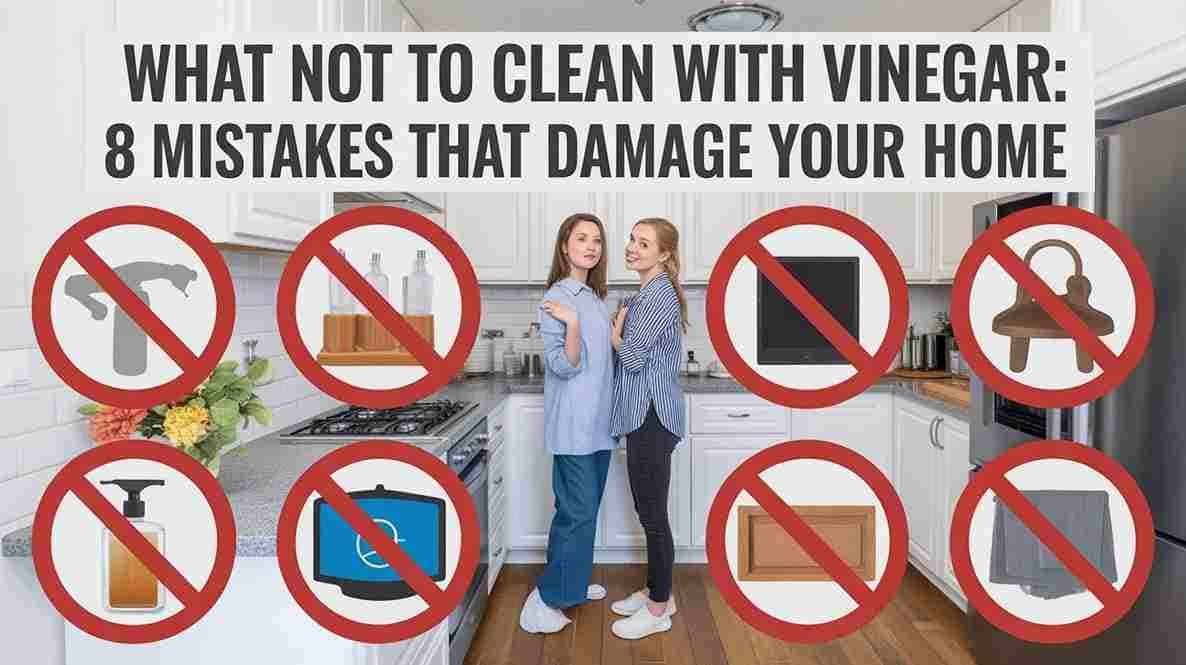
Many people often search what not to clean with vinegar before using it on different surfaces. When it comes to eco-friendly cleaning, many people often choose vinegar as a natural disinfectant because of its strong disinfectant properties and versatile solution for various household cleaning needs. From my experience handling different cleaning options, I’ve seen how using all-purpose cleaners like vinegar on all surfaces is not always the best choice.
This habit may start costing you over time through hidden cleaning risks, unexpected surface damage, and poor cleaning outcomes in real home cleaning situations. I’ve personally observed how improper cleaning, misuse of vinegar, and weak cleaning awareness reduce overall cleaning performance.
Many people fail to consider cleaning suitability, cleaning limitations, and proper cleaning context, which directly affects their final cleaning decisions and results. Before you use vinegar everywhere, it’s important to discuss what not to clean with vinegar and understand what to use instead.
Smart results depend on following cleaning guidance, practical cleaning tips, and clear cleaning warnings with safe cleaning methods that improve cleaning effectiveness. By improving cleaning habits, refining cleaning practices, and choosing better cleaning alternatives, you can reduce cleaning impact and build a stronger cleaning strategy.
This approach enhances your cleaning environment, shapes better cleaning behavior, and leads to stronger cleaning recommendations based on real cleaning scenarios and long-term cleaning relevance.
The Hidden History of Vinegar in Modern Home Cleaning
The story of vinegar in cleaning history didn’t start with modern hacks or shortcuts. It was originally valued for culinary purposes, medicinal purposes, preserving foods, making wine, and even wound cleaning thousands of years ago.
Over recent decades, it became a popular choice across low-tox lifestyles and eco-friendly lifestyles. It expanded into cleaning applications in kitchens, showers, and the broader cleaning environment.
Today, it is often used as a cleaning vinegar for almost everything, even when not always useful. From my experience, this shift introduced risky habits and misunderstood cleaning practices.
When used incorrectly on different surfaces, it leads to surface damage and reduced cleaning effectiveness. Instead of the desired results, users face unexpected cleaning outcomes and growing cleaning risks.
Many people ignore the importance of cleaning context, which directly affects cleaning behavior and long-term results. This increases overall cleaning impact and creates unintended consequences by causing damage.
Understanding how vinegar moved from agriculture and horticulture into daily routines explains its real cleaning relevance. Its performance depends on how it is used, applied from one surface to another, and whether it is truly delivering the desired results or simply following a popular choice.
1: Vinegar Cleaning Mistakes That Ruin Surfaces
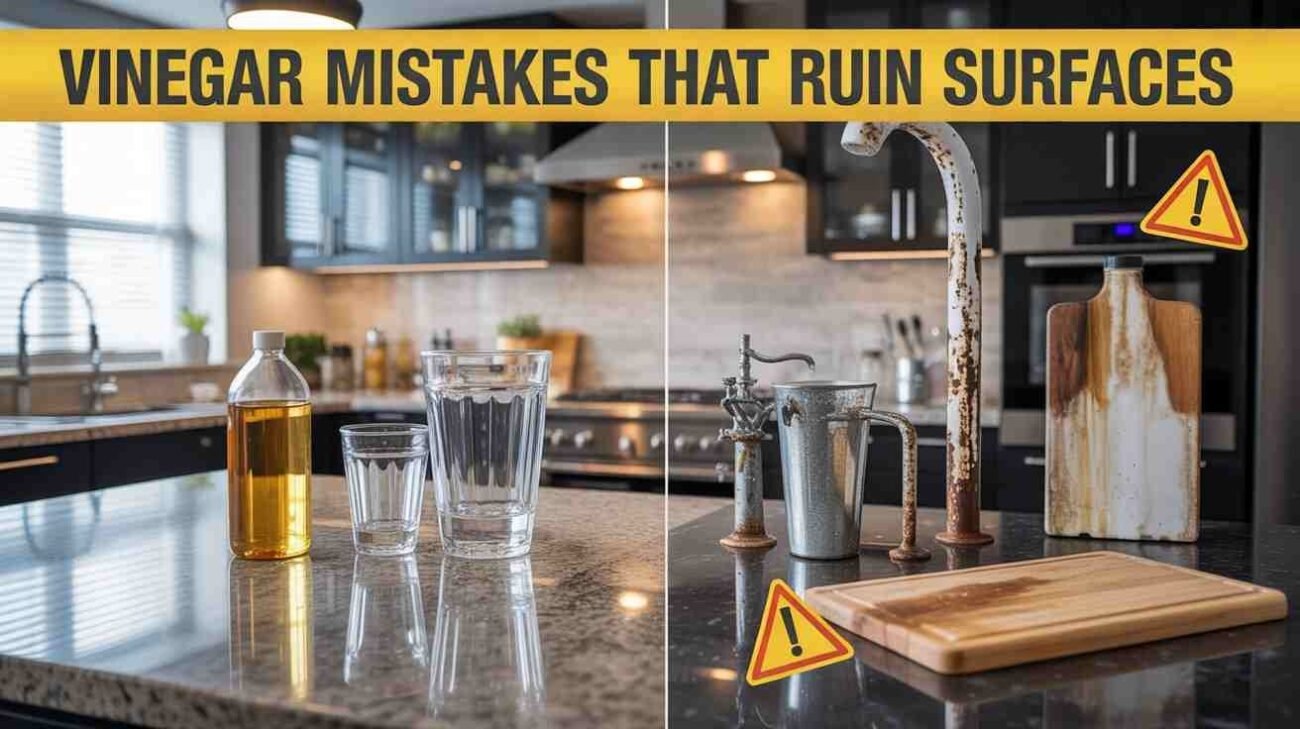
Vinegar typically contains around 5% acetic acid, and acetic acid can damage surfaces if used incorrectly. While this acidity helps break down dirt, grease, and bacteria effectively, it can also react aggressively with certain materials and cause long-term surface damage.
This is where most people make a critical mistake — they assume vinegar is safe for every cleaning situation inside the home. In reality, its effectiveness depends on the surface type, and using it incorrectly can lead to dull finishes, corrosion, or structural damage over time.
Vinegar works well on non-porous materials like glass and high-touch plastic surfaces, where it can remove buildup without causing harm. However, there are specific areas where vinegar should never be used, especially when preserving the surface quality and durability is important.
2: Dishwashers and Washing Machines
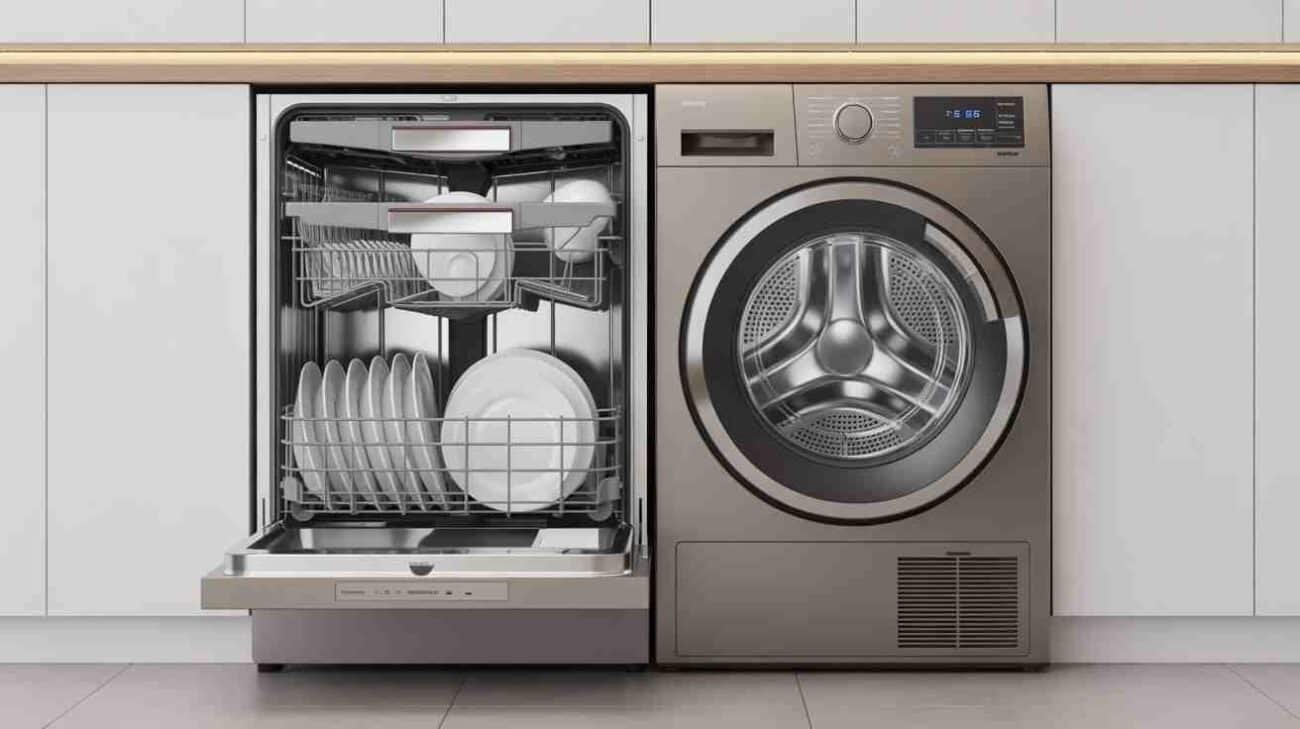
You’ve probably seen cleaning tips suggesting vinegar for dishwashers or washing machines to remove hard water buildup and eliminate odors. Many people even use it as a rinse aid, assuming it improves cleaning performance and keeps appliances fresh.
However, this approach isn’t as effective as it sounds. Research and appliance experts indicate that vinegar alone does not consistently break down mineral deposits, especially in heavily scaled systems, and its results are often temporary.
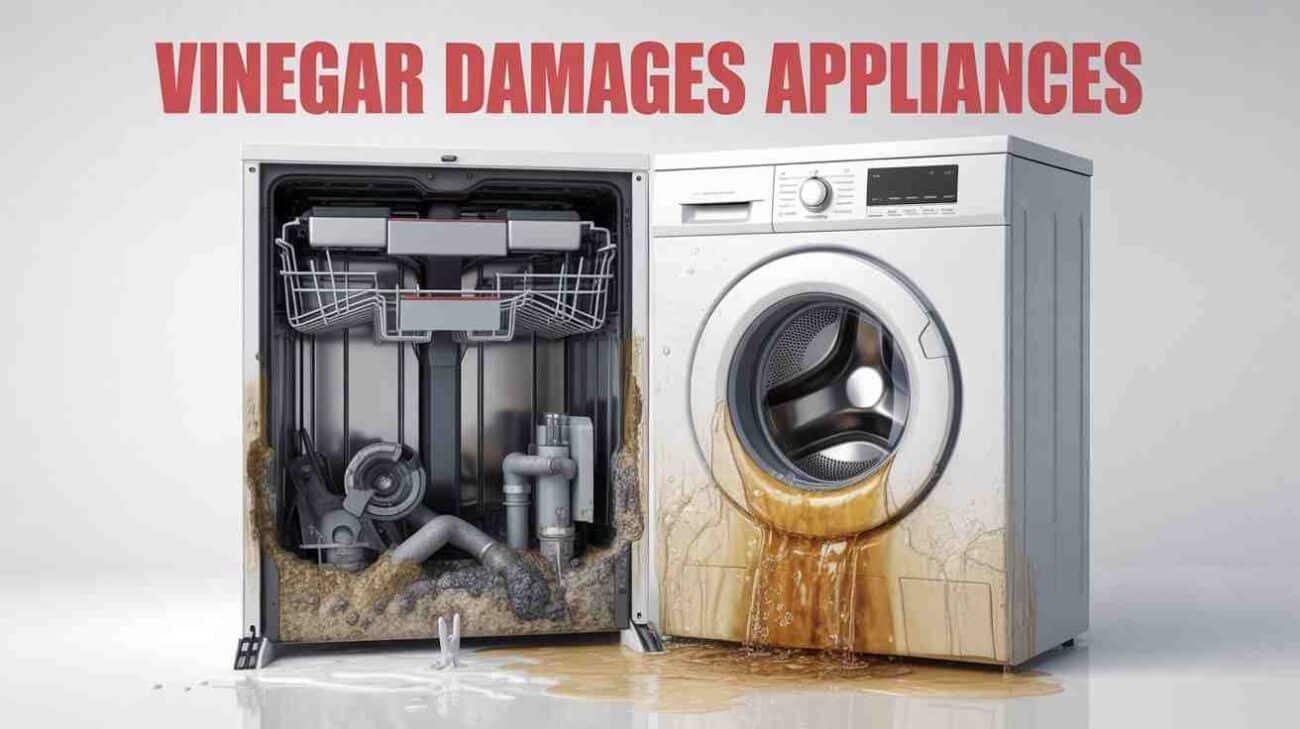
More importantly, repeated use of vinegar inside these appliances can damage internal components over time. The acidic nature of vinegar can degrade rubber seals, hoses, and gaskets, which may lead to leaks, reduced efficiency, or costly repairs.
For better long-term results, it’s safer to use cleaning products specifically designed for dishwashers and washing machines. These solutions are formulated to remove buildup without harming internal materials, ensuring both performance and durability.
For safe cleaning, use pH-neutral solutions along with a high-quality microfiber cloth that won’t scratch delicate stone surfaces. A soft option like Best Microfiber Cleaning Cloth 12 Pack Ultra Absorbent Soft helps remove dirt without damaging the finish.
3: Best choice: steam iron
Adding vinegar to a clothes iron might seem like an easy way to remove mineral buildup, but it can cause serious internal damage over time. Most modern steam irons are designed with delicate internal chambers and coatings that are not compatible with acidic liquids like vinegar.
The acetic acid in vinegar can slowly break down the protective coating inside the water tank and steam system. Once this layer is damaged, metal components become exposed, leading to corrosion, clogging, uneven steam output, and noticeable performance decline.
This type of damage is often permanent and can significantly reduce the lifespan of the appliance. Many manufacturers explicitly advise against using vinegar, as it may void warranties and result in expensive repairs or full replacement.
4: Tile Grout
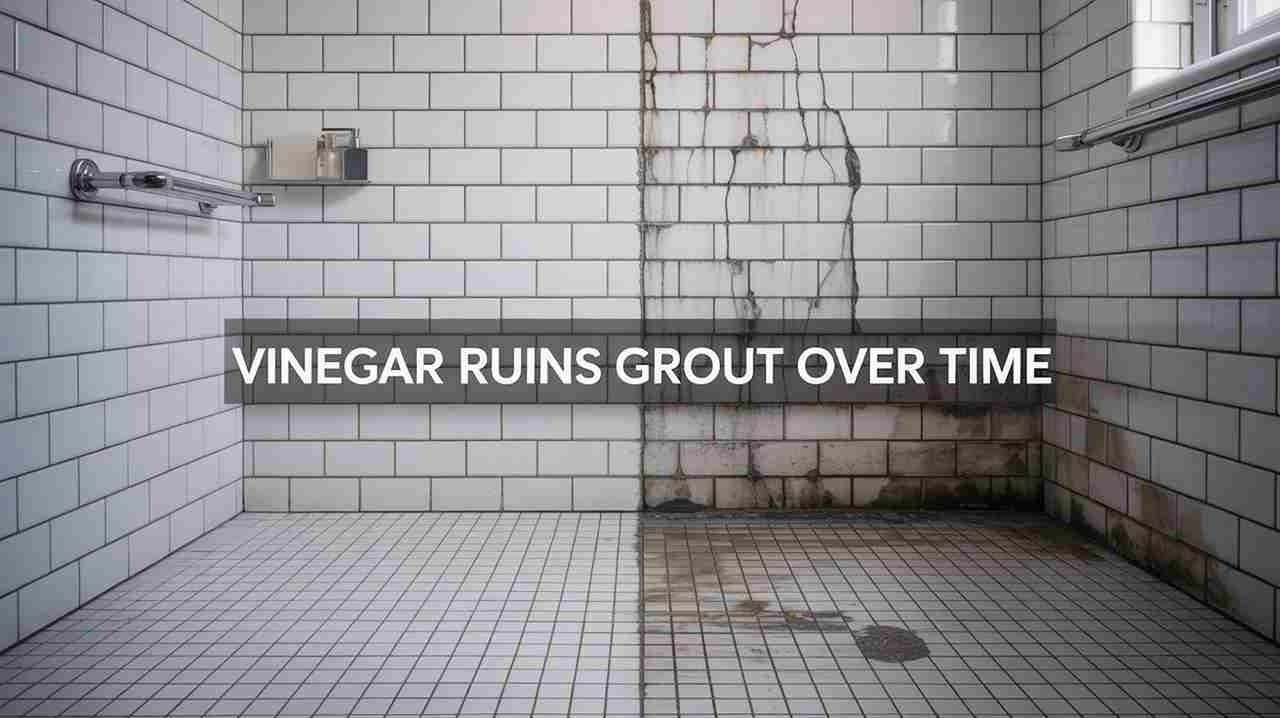
Mold and hard water stains often build up in grout lines, especially in damp areas like bathrooms and kitchens where moisture stays trapped. While vinegar can remove surface stains and kill some mold, it is not a safe long-term solution for cleaning grout.
The problem lies in vinegar’s acidity, which slowly breaks down the grout material over time. As the grout weakens, it becomes more porous, allowing moisture, mold, and mildew to penetrate deeper into the grout lines.
This process not only makes stains harder to remove but also leads to structural damage and faster mold regrowth. Instead of solving the issue, repeated use of vinegar can actually make grout deterioration worse and reduce its durability.
For better results, use a dedicated grout cleaner that removes buildup without damaging the grout structure. This helps maintain clean grout lines while preventing long-term damage and recurring mold problems.
5: kitchen knives

It may seem convenient to clean kitchen knives with vinegar because it can remove dirt and even loosen light rust from metal surfaces. This makes it look like an effective natural cleaner, especially for quick cleaning tasks.
However, vinegar’s acetic acid does more than remove rust—it also reacts with the exposed metal underneath. Over time, this reaction can lead to corrosion, weakening the blade structure and damaging the protective finish.
As corrosion progresses, the blade can lose its smooth edge, becoming dull, rough, and uneven instead of sharp and precise. This not only reduces cutting performance but can also shorten the lifespan of your knives significantly.
For safe cleaning, use mild detergent and warm water, then dry the knives immediately to prevent moisture damage. If rust appears, remove it gently with fine steel wool instead of relying on acidic solutions.
6: Small Appliances
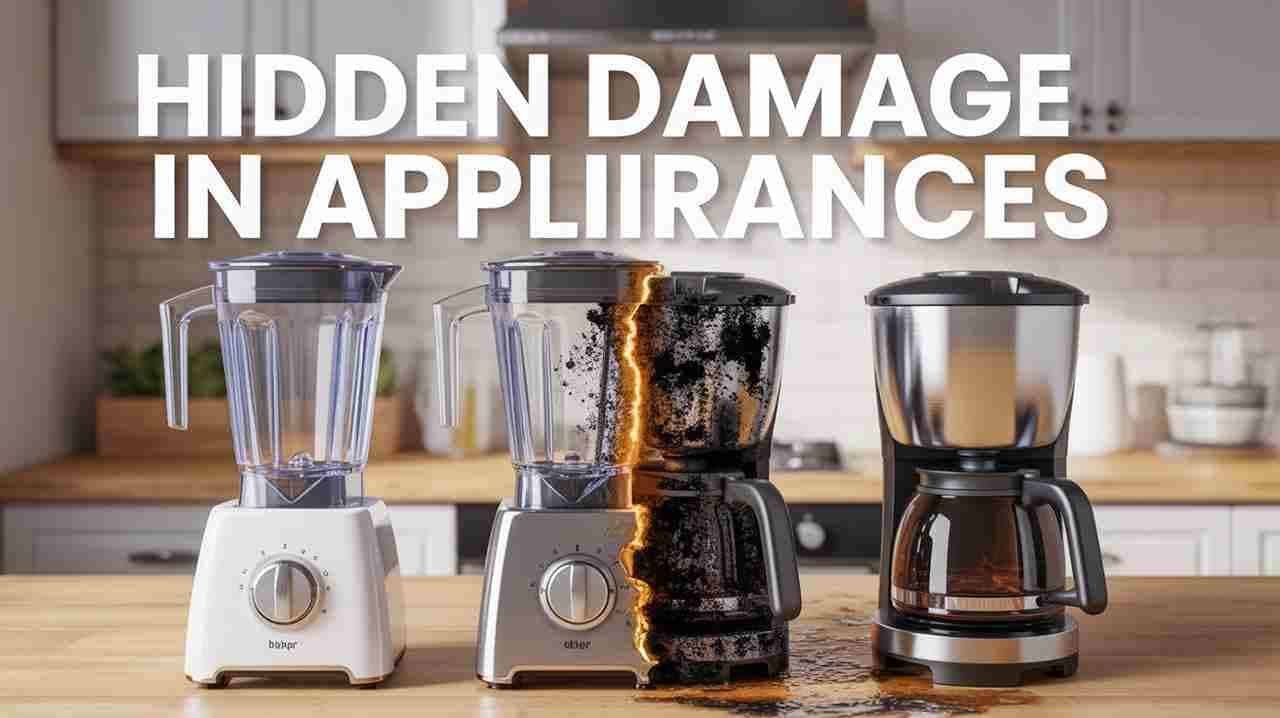
When cleaning small kitchen appliances like blenders, coffee makers, and toasters, vinegar can be effective on non-porous materials such as plastic and glass. It helps remove residue and light buildup without leaving harsh chemical traces.
However, problems start when vinegar comes into contact with sensitive components like rubber seals, gaskets, and internal tubing. Its acidic nature can slowly break down these materials, causing them to weaken, crack, or lose flexibility over time.
Vinegar can also react with metal parts, including stainless steel, leading to corrosion, discoloration, and reduced durability. This type of damage often happens gradually, making it harder to notice until performance issues appear.
For safer cleaning, focus on using mild detergent or appliance-specific cleaners that protect internal parts. This ensures proper maintenance without risking long-term damage to your appliances.
For safer cleaning, use mild detergent with a non-abrasive cloth that protects internal and external surfaces. Using a premium option like Premium Cleaning Cloths Microfiber Ultimate Streak Free Shine ensures effective cleaning without risking damage to sensitive components.
7: Wood Floors
Many flooring manufacturers strongly advise against using vinegar for cleaning wood floors, and some even void warranties if vinegar causes damage. This is because vinegar’s acidity can interfere with the protective finish designed to seal and protect the surface.
Even when diluted, vinegar can slowly break down this finish, leaving wood floors exposed to moisture and wear. Over time, this leads to a cloudy appearance, dull shine, surface scratches, and reduced durability.
As the protective layer weakens, the floor becomes more vulnerable to staining, warping, and long-term structural damage. What seems like a simple cleaning method can actually shorten the lifespan of your flooring.
For safer results, use cleaners specifically designed for wood floors that preserve the finish and maintain the natural look. This helps protect both the appearance and long-term performance of your flooring.
8: Device Screens
Cleaning device screens like phones, TVs, and computers can be challenging because they easily collect fingerprints, dust, and oily smudges. This often leads people to use vinegar as a quick solution to remove visible dirt and restore clarity.
However, vinegar is not safe for screen cleaning, especially when used undiluted or frequently. Most modern device screens have delicate protective layers, including anti-glare and oleophobic coatings, which are highly sensitive to acidic solutions.
The acetic acid in vinegar can gradually break down these coatings, leading to reduced screen clarity, uneven glare, and poor touch responsiveness. Over time, this damage becomes permanent, making the screen harder to use and reducing overall display quality.
For safe cleaning, use a soft microfiber cloth slightly dampened with water or a screen-safe cleaner. This removes smudges effectively without damaging the protective surface or affecting device performance.
For safe cleaning, use a soft microfiber cloth slightly dampened with water or a screen-safe cleaner. A specialized option like Ultra Soft Microfiber Eyeglass Cleaning Cloth Streak Free Shine is ideal for removing smudges without damaging delicate screen coatings.
FAQ
Can vinegar damage appliances?
Yes, vinegar can damage appliances over time. It can break down rubber seals, gaskets, and internal components, leading to leaks and reduced performance.
Is vinegar safe for all surfaces?
No, vinegar is not safe for all surfaces. It can damage porous materials, coated finishes, natural stone, and sensitive surfaces.
Why is vinegar bad for wood floors?
Vinegar is bad for wood floors because it breaks down the protective finish. This leads to dullness, scratches, and long-term surface damage.
Can vinegar damage screens?
Yes, vinegar can damage device screens. It removes protective coatings like anti-glare and reduces touch responsiveness over time.
What to avoid cleaning with vinegar?
Avoid cleaning these surfaces with vinegar:
Stone countertops
Wood floors
Grout lines
Device screens
Appliances with rubber or metal parts
Vinegar’s acidity can cause corrosion, dullness, and long-term damage.
What shouldn’t you put vinegar on?
Do not use vinegar on these materials:
Natural stone
Hardwood floors
Kitchen knives
Tile grout
Clothes irons
Device screens
These surfaces can react with acid and get damaged.
Is white vinegar good for cholesterol?
White vinegar is not proven to lower cholesterol significantly. It may support blood sugar control but should not replace medical treatment.
Read More: Microfiber Cloth: The Surprising Secret to Better Cleaning