
Why Do Blue Nitrile Gloves Turn Yellow? Find Out Now!


Introduction
If you’ve ever worked with blue nitrile gloves turn yellow, you may have wondered why this happens. The issue is caused by a chemical reaction called oxidation. As the gloves are exposed to oxygen, the polymer chains begin to break down, causing a yellowish hue. This process is accelerated by heat, light, and even specific chemicals. UV rays from sunlight or artificial sources can initiate a photochemical reaction, further breaking down the polymer structure and leading to discoloration. Exposure to volatile compounds, oils, or environmental humidity can speed up this reaction and make the gloves turn yellow faster.
To reduce this problem, it’s important to store your gloves properly. Keeping them in a cool, dry, and dark place can help minimize the oxidation process. Additionally, regular cleaning with mild soap and water can prevent yellowing caused by oils or other substances. By following these simple steps, you can help maintain the flexibility and protection of your nitrile gloves, ensuring they last longer and stay in optimal condition.
chemical change

When blue nitrile gloves turn yellow, it’s primarily due to a chemical reaction known as oxidation. The gloves are made from a polymer called acrylonitrile butadiene, which contains double bonds in its molecular structure. Over time, these bonds react with oxygen in the air, altering the structure and causing a noticeable yellowish discoloration.
This reaction can be accelerated by heat and light, which break down the polymer bonds even faster. To prevent this discoloration, it’s essential to understand how these chemical changes occur and take steps to protect the gloves.
Light Exposure
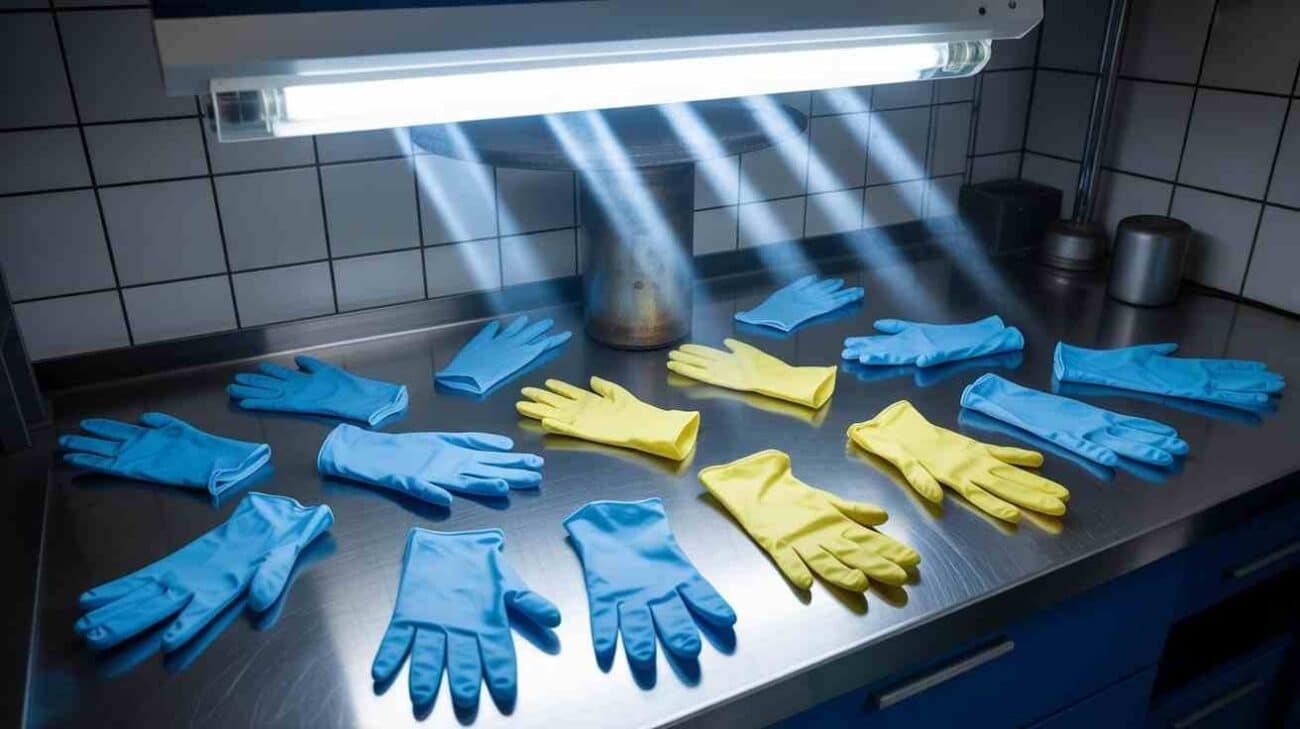
The yellowing of blue nitrile gloves is often accelerated by light exposure, especially from ultraviolet (UV) rays found in sunlight or artificial sources like fluorescent lights. These UV rays trigger a photochemical reaction within the nitrile material, breaking down the polymer chains and causing a yellowish hue.
The energy from the light intensifies this process, speeding up chemical changes that lead to discoloration. To prevent this, it’s essential to store the gloves in a dark place or use opaque storage containers to shield them from direct light exposure when not in use.
Elevated Temperatures
Elevated temperatures can cause blue nitrile gloves to turn yellow more quickly. When exposed to heat, the polymer chains in the gloves begin to break down, speeding up the oxidation process. This breakdown of the chemical properties accelerates the yellowing of the gloves. Additionally, high heat can cause the release of volatile compounds from the gloves, which may interact with the surrounding environment and further intensify color changes. To minimize this issue, it’s important to store nitrile gloves in a cool, dry place, away from direct sources of heat like radiators or sunlight.
Environmental Influences
Exposure to chemicals like sulfur and chlorine can cause blue nitrile gloves to turn yellow. When the nitrile material comes into contact with these substances, it can trigger chemical reactions that lead to discoloration. In addition, prolonged contact with oils or greasy substances can also contribute to yellowing. Environmental humidity and moisture can further accelerate the oxidation process, making the gloves change color faster. To preserve the original color and quality of your gloves, it’s important to minimize exposure to these environmental factors as much as possible.
Protection and upkeep
To keep blue nitrile gloves looking their best and prevent them from turning yellow, proper protection and upkeep are key. Store your gloves in storage containers or drawers away from sunlight, heat, and chemicals that could cause discoloration. Regular cleaning with soap and water can remove dirt or substances that contribute to yellowing. Wearing glove liners also helps prevent contact with sweat or oils from your skin. These simple preventive measures not only extend the lifespan of your gloves but also help maintain their appearance over time.
CONCLUSION
To prevent blue nitrile gloves from turning yellow, understanding the factors behind the yellowing process is crucial. Chemical reactions, exposure to light, high temperatures, and environmental factors all contribute to discoloration. By following proper storage practices, avoiding harmful substances, and maintaining your gloves regularly, you can prolong their lifespan and preserve their aesthetics. These preventive measures ensure that nitrile gloves perform at their best in any industry, keeping their color intact for longer, enhancing their optimal performance.
FAQ’S
Why do blue nitrile gloves turn yellow?
Blue nitrile gloves turn yellow due to a chemical reaction called oxidation. Over time, oxygen reacts with the polymer chains in the gloves, causing discoloration. Exposure to UV rays, high temperatures, and environmental factors like humidity, chemicals, and oils can accelerate this process, leading to yellowing.
How can I prevent my nitrile gloves from turning yellow?
To prevent blue nitrile gloves from turning yellow, store them in a cool, dark, and dry place, away from sunlight and heat. Use opaque storage containers to shield the gloves from light. Regular cleaning with mild soap and water helps maintain their color. Additionally, avoid contact with chemicals, oils, and greasy substances that can contribute to yellowing.
What causes the yellowing of nitrile gloves?
The yellowing of nitrile gloves is caused by oxidation, a chemical reaction where the gloves’ polymer chains break down due to exposure to oxygen. Heat, light, and chemical exposure like sulfur, chlorine, and oils can accelerate this process, leading to a yellowish hue over time.
Can heat cause nitrile gloves to turn yellow?
Yes, high temperatures can cause blue nitrile gloves to turn yellow. Heat accelerates the oxidation process, which breaks down the polymer chains in the gloves, leading to yellowing. Storing the gloves in a cool and dry place helps reduce the impact of heat on the gloves.
How does light exposure affect nitrile gloves?
Light exposure, particularly from UV rays in sunlight or artificial light, can trigger a photochemical reaction in the nitrile material, leading to yellowing. To prevent this, store gloves in dark places or use opaque containers to protect them from direct light exposure when not in use.
What chemicals can cause nitrile gloves to turn yellow?
Certain chemicals, like sulfur and chlorine, can interact with the nitrile material and trigger a chemical reaction, causing yellowing. Prolonged contact with oils or greasy substances can also accelerate the discoloration process.
How can I maintain the color of nitrile gloves?
To maintain the color of blue nitrile gloves, store them in a cool, dark, and dry place. Regular cleaning with soap and water helps remove dirt and oils that contribute to yellowing. Using glove liners and avoiding contact with chemicals or oils can further extend their lifespan and maintain their appearance.
Do environmental factors contribute to nitrile glove yellowing?
Yes, environmental factors like humidity, moisture, and volatile compounds can accelerate the oxidation process in nitrile gloves, leading to yellowing. Limiting exposure to these factors and storing gloves properly can prevent discoloration and preserve the gloves’ quality.
How do I store nitrile gloves to prevent yellowing?
Store nitrile gloves in cool, dry, and dark places, away from sunlight, heat, and chemicals. Using opaque storage containers or drawers helps shield the gloves from light exposure, preventing the oxidation process that leads to yellowing.
Read More: Are Nitrile Gloves for Cooking Safe? Surprising Facts